
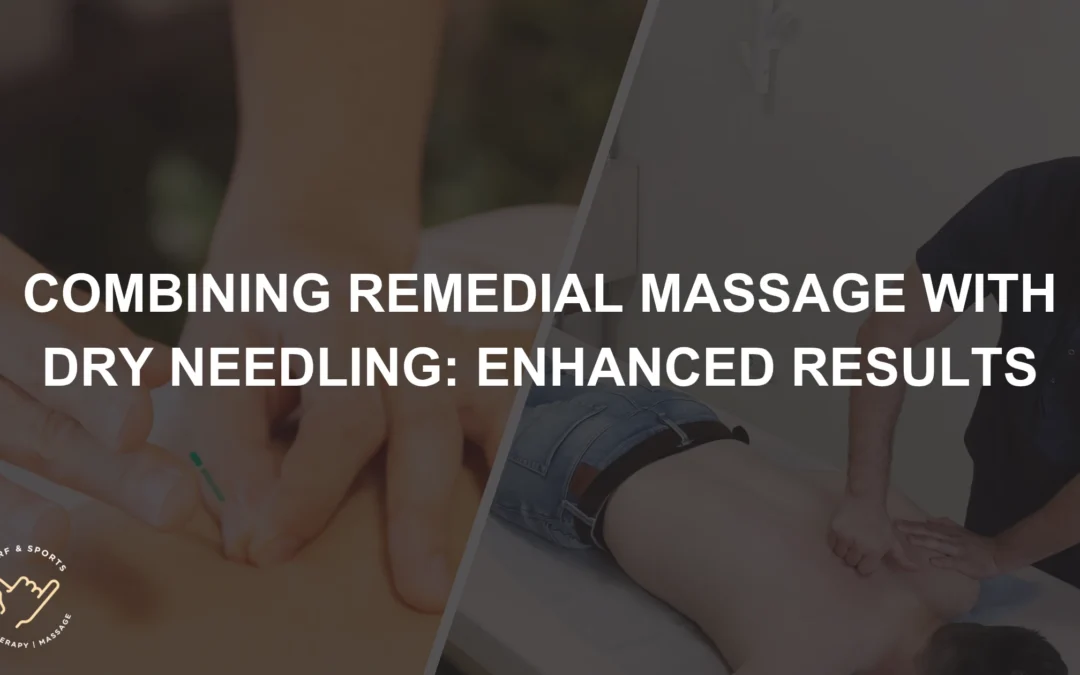
Remedial massage and dry needling target the same problem from two different angles, and when used together, they often help release a stubborn muscle faster than either technique alone. Massage works the surrounding tissue and prepares it to respond; dry needling goes straight into the myofascial trigger point causing the tightness. At Surf & Sports Myotherapy in Noosaville, this combination is a standard part of the treatment for persistent muscle knots and chronic tension.
Key Takeaways
- Remedial massage and dry needling address muscle tightness differently — one works broadly through the tissue, the other targets a specific trigger point directly.
- Combining them in a single session tends to release stubborn knots faster than repeating either technique alone across multiple visits.
- Massage before needling warms and prepares the muscle; massage after needling helps calm any post-treatment soreness.
- Not every muscle issue requires both techniques — a therapist decides based on the assessment findings.
What Combining Remedial Massage and Dry Needling Actually Means
Combining remedial massage with dry needling means using hands-on manual therapy alongside fine-needle trigger point treatment within the same session, a pairing increasingly used by remedial massage therapists and myotherapists for musculoskeletal pain that hasn’t responded to either technique in isolation. It isn’t a package deal offered for its own sake — it’s used specifically when a trigger point is too deep or too stubborn for massage pressure alone to fully release it.
The two techniques aren’t interchangeable. Massage works through compression, stretching, and manipulation of muscles and surrounding soft tissues. Dry needling inserts a fine, sterile needle directly into the trigger point, prompting a local twitch response that manual pressure alone often can’t elicit.
How the Two Techniques Work Together
Remedial Massage Prepares the Tissue
Starting with massage warms the muscle, increases local blood flow, and gives the therapist a clearer picture of exactly where the tightness sits before a needle goes anywhere near it. It also makes the muscle less guarded, which tends to make the subsequent needling more effective and comfortable.
Dry Needling Targets the Trigger Point Directly
Once the tissue has been assessed and prepared, dry needling reaches the specific trigger point that massage pressure couldn’t fully release. The needle triggers a local twitch response in the muscle fibre, which is associated with the trigger point letting go and the surrounding tension easing.
Massage Alone vs Dry Needling Alone vs Combined
| Approach | Best For | Limitation |
| Remedial massage alone | General muscle tension, surface-level tightness, relaxation | May not fully release deep or stubborn trigger points |
| Dry needling alone | A specific, well-located trigger point | Doesn’t address broader muscle tension around the point |
| Combined in one session | Chronic knots, deep trigger points, tension that keeps returning | Not needed for mild, general tightness |
Why This Combination Produces Better Results
A trigger point that’s been tight for months usually isn’t just a knot on its own — the surrounding muscle has often adapted around it, guarding the area and restricting movement beyond the original spot. Massage on its own can ease that surrounding guarding, but it can’t always reach the trigger point itself if it sits deep in the muscle. Needling alone can release the point but leaves the broader tension untouched. Together, the two techniques clear the way for each other.
Gary Javonena, myotherapist and dry needling practitioner at Surf & Sports Myotherapy, treats this combination as a standard tool for patients whose pain keeps returning to the same spot despite regular massage: if a trigger point hasn’t shifted after a few sessions of massage alone, that’s usually the signal to bring dry needling into the same appointment rather than treating them as separate services on separate visits.
What to Expect When Both Are Used in One Session
A combined session at Surf & Sports Myotherapy typically opens with assessment and massage, moves into dry needling once the trigger point is clearly located, and closes with a shorter round of massage to settle the area. The needling itself is brief — often just a few seconds per point — and any post-needling soreness usually eases within a day or two.
Not every appointment needs both. A therapist will only introduce needling into a massage session when the assessment identifies a trigger point unlikely to release with manual pressure alone, which is consistent with clinical guidance published by resources such as Physio-pedia on trigger point management.
Frequently Asked Questions
Q: Is combining remedial massage and dry needling more painful than either alone?
A: Not typically. Massage beforehand tends to make needling more comfortable, since the muscle is already warmed and less guarded when the needle goes in.
Q: How do I know if I need both, or just one?
A: That comes down to assessment. A trigger point that hasn’t responded to massage alone over a few sessions is the usual signal that needling could help.
Q: Will I be sore after a combined session?
A: Mild soreness around the needled point for a day or so is common, similar to post-exercise muscle soreness. It usually settles quickly.
Q: Can any remedial massage therapist perform dry needling?
A: No — dry needling requires separate, specific training beyond a remedial massage qualification, so it’s worth checking a practitioner is qualified in both before booking a combined session.
Getting the Right Combination for Your Situation
Mention any spots that keep tightening up again despite regular massage — that’s exactly the pattern a combined approach is built for. Book an assessment with Surf & Sports Myotherapy to find out whether your tension needs massage, needling, or both in the same session.
Opening hours: Monday–Friday 08:00–19:00 | Saturday 08:00–16:00 Location: 3/14 Thomas St, Noosaville QLD 4566

About the Author
Gary Javonena is the founder of Surf & Sports Myotherapy and holds an Advanced Diploma of Myotherapy from RMIT University.
Gary’s clinical work includes the assessment of complex musculoskeletal presentations in which referred pain, postural dysfunction, and systemic contributors intersect — including cases in which gastrointestinal function directly contributes to lumbar pain patterns. Meet the full team.
Related posts
How Remedial Massage Helps Runners Prevent IT Band Syndrome
Remedial massage for runners is one of the most effective tools for preventing iliotibial band...
Pre-Event vs Post-Event Remedial Massage for Noosa Triathlon Athletes
Noosa is known for world-class sporting events and a strong health and wellbeing culture. If...
Remedial Massage for Surfers: Recovery and Injury Prevention in Noosa
Surfing in Noosa looks effortless right up until your shoulders feel cooked, your neck pain creeps...