
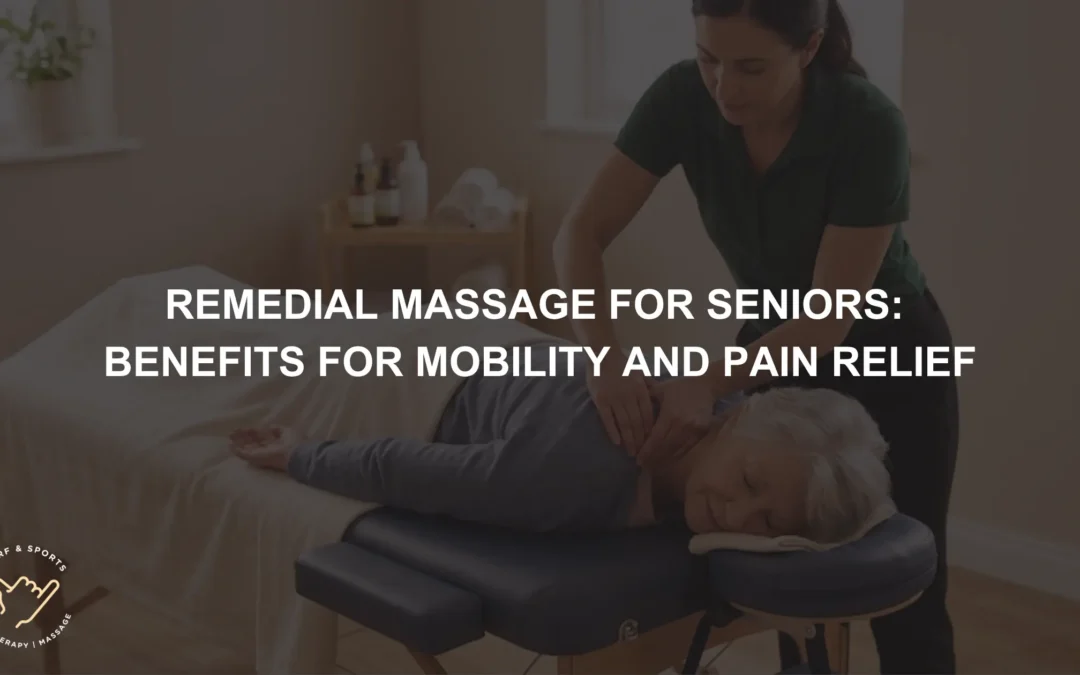
Executive Summary: Remedial massage can be genuinely useful for older adults, but only when it’s adapted to the body in front of the therapist. Lighter pressure, shorter sessions, and careful positioning help ease arthritis pain, stiff joints, and poor circulation without adding strain to a frailer frame. Done properly, it supports mobility, reduces chronic pain, and helps seniors stay active in everyday life.
Key Takeaways:
- Remedial massage for seniors needs a different approach: gentler pressure, shorter sessions, and close attention to existing conditions.
- The biggest wins are usually mobility, joint stiffness, and chronic pain from arthritis or long-term postural issues.
- A proper health history and assessment matter more here than with a younger, generally healthy client.
- Persistence with smaller, regular sessions tends to work better than a single long, intense treatment.
Remedial massage for seniors is a modified form of remedial massage that targets the muscle and joint issues common with aging, arthritis, poor circulation, and reduced mobility, while accounting for thinner skin, fragile bones and existing health conditions. It isn’t a softer version of the same treatment given to a 30-year-old athlete. It’s a different treatment altogether, built around what an older body can safely tolerate and what it actually needs.
What Makes It Safe for Older Bodies
The biggest difference is pressure and positioning. Deep, sustained pressure that works well on a stiff athlete’s hamstring can bruise or aggravate fragile tissue in an older client, especially around the spine, hips or any joint affected by osteoporosis. A therapist working with seniors adjusts technique accordingly, using slower, lighter strokes and avoiding certain areas altogether if there’s a history of blood clots, recent fractures or skin conditions.
This is also where a proper assessment earns its keep. Before any treatment starts, it’s worth going through current medications, recent surgeries and existing diagnoses like arthritis or osteoporosis with the therapist, and checking with a GP first if there’s any doubt. Once that’s covered, the massage itself can be tailored to specific goals, whether that’s a lighter touch overall or more targeted work on trigger points causing localised pain, rather than applied as a deep-tissue massage routine.
The Main Benefits for Seniors
- Easing arthritis pain and stiffness. Gentle work around an arthritic joint and the surrounding muscle can reduce stiffness and improve comfort, even though it won’t change the underlying joint damage.
- Better mobility and range of motion. Loosening tight muscle around the hips, shoulders, and lower back makes everyday movement, like getting out of a chair or reaching overhead, noticeably easier.
- Improved circulation. Reduced activity levels lead to poorer circulation in older adults, and manual pressure techniques can help bring blood back to areas that need it.
- Relief from chronic pain. Long-standing issues like lower back pain or postural pain from years of habit respond well to regular, lighter treatment rather than a single intense session.
- Stress relief and better sleep. The nervous system response to massage, a drop in stress hormones and a lift in mood, matters just as much for wellbeing in later life as physical benefits do.
Taken together, these small, consistent gains add up to a better overall quality of life, which is really the point for most seniors and their families rather than any single measurable outcome.
What a Session Looks Like
Consideration | Why It Matters | How It’s Adjusted |
Pressure | Thinner skin and lower bone density increase bruising risk | Lighter, slower strokes over sensitive areas |
Session length | Longer sessions can be tiring or uncomfortable to hold | Shorter sessions, often 30-45 minutes |
Positioning | Lying flat or face-down may be difficult or unsafe | Supported positions, sometimes seated or side-lying |
Health history | Existing conditions change what’s safe to treat | Full assessment before the first session |
Is It Safe for an Older Person to Get a Massage?
For most healthy older adults, yes, it’s both safe and worthwhile. The answer depends on specific conditions rather than age alone. Anyone with osteoporosis, a recent fracture, a blood-clotting disorder, or who is recovering from surgery should check with their GP before booking in. Our approach to remedial massage starts with that conversation, so nothing gets missed before the first session, and it often runs alongside other care like myotherapy or a home exercise plan rather than replacing it.
Access and Practicalities
Cost and coverage vary depending on private health cover, a home care package under aged care funding, or NDIS support, and the details differ from person to person, so it’s worth checking directly with your provider rather than assuming what’s included. On frequency, there’s no fixed rule. Chronic conditions like arthritis usually respond better to shorter, more frequent sessions, while general stiffness might only need a monthly visit. Our guide on how often to get remedial massage covers this in more detail, and our piece on remedial massage for arthritis goes deeper into what to expect if joint pain is the main concern.
Frequently Asked Questions
What type of massage is best for seniors?
A gentler, assessment-led remedial massage is usually the safest starting point, since it can be adapted to existing conditions rather than following a fixed routine.
Is massage therapy good for seniors?
For most people, yes. It can ease joint stiffness, improve circulation, and support mobility, provided the therapist first knows the person’s health history.
Should an 80-year-old get a massage?
Age alone isn’t the deciding factor. What matters is current health, medications and any conditions like osteoporosis or clotting issues, which is why a proper check-in before the first session matters more than it does for a younger client.
Getting Started
According to Arthritis Australia, gentle massage around affected joints is a reasonable complement to standard arthritis management, alongside movement and medical treatment, rather than a replacement for it. If you’re supporting a parent, or looking after your own mobility as you get older, the safest first step is a proper assessment rather than guessing what will help. Book a session at our Noosa remedial massage clinic, and we’ll work out what’s appropriate before we start. Online booking is available if that’s easier than calling.
Opening hours: Monday–Friday 08:00–19:00 | Saturday 08:00–16:00 Location: 3/14 Thomas St, Noosaville QLD 4566

About the Author
Gary Javonena is the founder of Surf & Sports Myotherapy and holds an Advanced Diploma of Myotherapy from RMIT University.
Gary’s clinical work includes the assessment of complex musculoskeletal presentations in which referred pain, postural dysfunction, and systemic contributors intersect — including cases in which gastrointestinal function directly contributes to lumbar pain patterns. Meet the full team.
Related posts
How Remedial Massage Therapists Assess Muscle Imbalances
A remedial massage assessment is what separates a targeted treatment plan from a generic rubdown....
Why Your Remedial Massage Session Includes Stretching (And What It’s Actually Doing)
Stretching inside a remedial massage session is a targeted technique, not a filler add-on. At Surf...
Myofascial Release Techniques Used in Remedial Massage
Myofascial release is a manual therapy technique that targets the fascia, the connective tissue...