

Executive Summary: Remedial massage works by physically changing the state of your soft tissues and nervous system, not just by making you feel good for an hour. Pressure applied to muscle, fascia, and trigger points improves local blood flow, lowers cortisol levels, and interrupts the pain-tension cycle that perpetuates chronic conditions. The results are measurable: improved range of motion, reduced muscle tension, and faster recovery from sports injuries and everyday strain.
Key Takeaways:
- Remedial massage targets specific dysfunction in muscles and connective tissue, unlike relaxation massage, which is more general in nature.
- Increased blood flow and reduced muscle tension are the two biggest drivers of pain relief after treatment.
- Trigger point therapy and myofascial release address the small, localised knots that cause referred pain.
- Consistency matters more than intensity. Most people see the biggest gains from regular, assessment-led sessions rather than one-off deep tissue work.
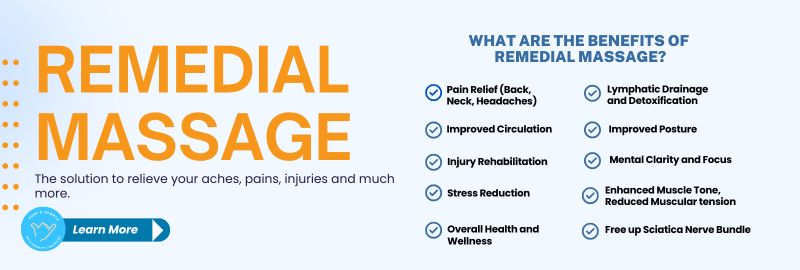
Remedial massage is a targeted, assessment-based therapy that treats muscle, tendon and connective tissue dysfunction to relieve pain, restore range of motion and support recovery from injury. Where a relaxation massage follows a set routine, a remedial massage therapist assesses posture, movement patterns and areas of restriction first, then adjusts pressure and technique to that specific problem. That distinction is where most of the science-backed benefits actually come from.
What Happens in Your Body During a Remedial Massage
Applied pressure on tight or restricted tissue does three things almost immediately. It increases local circulation, which brings oxygen and nutrients to fatigued muscle and helps clear the metabolic waste that builds up after exercise or long periods of poor posture. It stimulates mechanoreceptors in the skin and muscle, which can reduce the perception of pain through the nervous system. It triggers a drop in cortisol alongside a rise in serotonin, which is why most people leave a session feeling calmer as well as looser.
This is also where trigger point therapy comes in. A myofascial trigger point is a small, hyperirritable spot in a tight band of muscle that refers pain elsewhere; a tight spot in the upper trapezius that produces a headache is a common example. Sustained, targeted pressure on that point, combined with stretching, helps release it in a way that generic rubbing usually can’t.
The Main Evidence-Backed Benefits
- Pain relief in chronic conditions. Regular remedial massage is commonly used alongside physiotherapy to manage chronic lower back pain, sciatica and postural pain from desk work, by reducing the muscle guarding that keeps a painful area locked up.
- Improved range of motion. Releasing tension in the muscle and surrounding fascia allows a joint to move more freely, which matters for anyone returning to sport or simply trying to reach overhead without a shoulder catching.
- Better circulation. Manual pressure and stroking techniques promote blood flow to areas that have reduced circulation from injury, scarring or prolonged inactivity, speeding up how quickly soft tissue repairs itself.
- Reduced stress and better sleep. The nervous system response to massage lowers stress hormones and can improve sleep quality, particularly for people whose muscle tension is partly driven by stress.
- Support for sports injury recovery. Whether it’s a strained calf, tight hip flexors or shoulder overuse from swimming, remedial massage helps manage the soft tissue side of recovery while other treatment, like dry needling or a physiotherapy plan, addresses the rest.
- Easing arthritis and joint stiffness. Gentle work around an arthritic joint can reduce swelling and stiffness in surrounding muscle, which won’t reverse the underlying disease but often makes daily movement more comfortable.
A physiotherapist or GP will usually still lead the medical side of a chronic condition, but a remedial massage therapist can work alongside that plan, focusing on the muscle, tendon and soft tissue changes that accompany the underlying problem rather than the diagnosis itself.
Remedial Massage vs Other Types of Massage
| Factor | Remedial Massage | Relaxation Massage |
| Primary goal | Treat a specific muscle, joint or postural issue | General relaxation and stress relief |
| Approach | Assessment first, then targeted technique and pressure | Set routine, consistent pressure throughout |
| Best suited to | Chronic pain, sports injuries, postural dysfunction, recovery | Everyday stress, tension without a specific injury |
If you’re unsure which one actually fits your situation, our full breakdown of remedial massage vs relaxation massage goes through it in more detail.
Why the Assessment Matters as Much as the Massage
The evidence behind remedial massage is strongest when it’s paired with a proper assessment rather than applied as a generic treatment. Our founder Gary Javonena built the clinic around exactly this idea: identifying the muscle imbalance or movement pattern causing the problem first, then choosing techniques that actually address it, rather than defaulting to the same deep pressure for every patient. That’s also why remedial massage sits comfortably alongside myotherapy and dry needling in a broader treatment plan for musculoskeletal conditions, rather than replacing them.
How Often You Need It, and What to Expect
There’s no single answer that fits everyone. Someone managing chronic lower back pain will need a different frequency than someone recovering from a one-off sports injury. Our guide on how often to get remedial massage covers the general recommendations, but as a rule, consistency over several weeks produces better, longer-lasting results than an occasional single session. If it’s your first time booking in, it also helps to know what to expect during your first session, from the initial assessment through to aftercare.
Frequently Asked Questions
What happens to your body after a remedial massage?
Mild soreness for a day or so is common, similar to how muscle feels after exercise, along with improved movement and reduced tension in the treated area. Staying hydrated and moving gently afterwards helps that settle faster.
What’s the difference between remedial massage and a regular massage?
A regular or relaxation massage follows a general routine, while remedial massage is assessment-led and targets a specific muscle or joint issue with techniques matched to that problem.
How often should you have a remedial massage?
It depends on what you’re treating. Chronic or recurring issues usually respond best to regular sessions over several weeks, while general maintenance might only need monthly visits.
Getting the Most Out of Remedial Massage
The science is fairly consistent: remedial massage works best when it’s targeted, assessed properly, and repeated with some consistency, rather than treated as a one-time fix. According to Myotherapy Association Australia, this assessment-driven approach is what separates clinical remedial and myotherapy treatment from general wellness massage. If you’re dealing with a persistent ache, recovering from a sports injury, or just want to know what’s actually causing your muscle tension, book a session at our Noosa remedial massage clinic, and we’ll assess it properly before deciding on a plan, with online booking available if you’d rather skip the phone call.
Opening hours: Monday–Friday 08:00–19:00 | Saturday 08:00–16:00 Location: 3/14 Thomas St, Noosaville QLD 4566

About the Author
Gary Javonena is the founder of Surf & Sports Myotherapy and holds an Advanced Diploma of Myotherapy from RMIT University.
Gary’s clinical work includes the assessment of complex musculoskeletal presentations in which referred pain, postural dysfunction, and systemic contributors intersect — including cases in which gastrointestinal function directly contributes to lumbar pain patterns. Meet the full team.
Related posts

Vitamin D Deficiency and Chronic Muscle Aches – A Hidden Cause
Queensland is one of the sunniest places on Earth, and the Sunshine Coast lives up to its name —...

Magnesium Deficiency and Muscle Cramps – Are You Missing This?
Magnesium is the mineral most commonly reached for when muscle cramps are a problem — and the...

Sinus Infections and Headaches vs Tension Headaches – How to Tell Which One You Have
A study published in the Journal of Headache and Pain found that 81.5% of patients with a prior...