
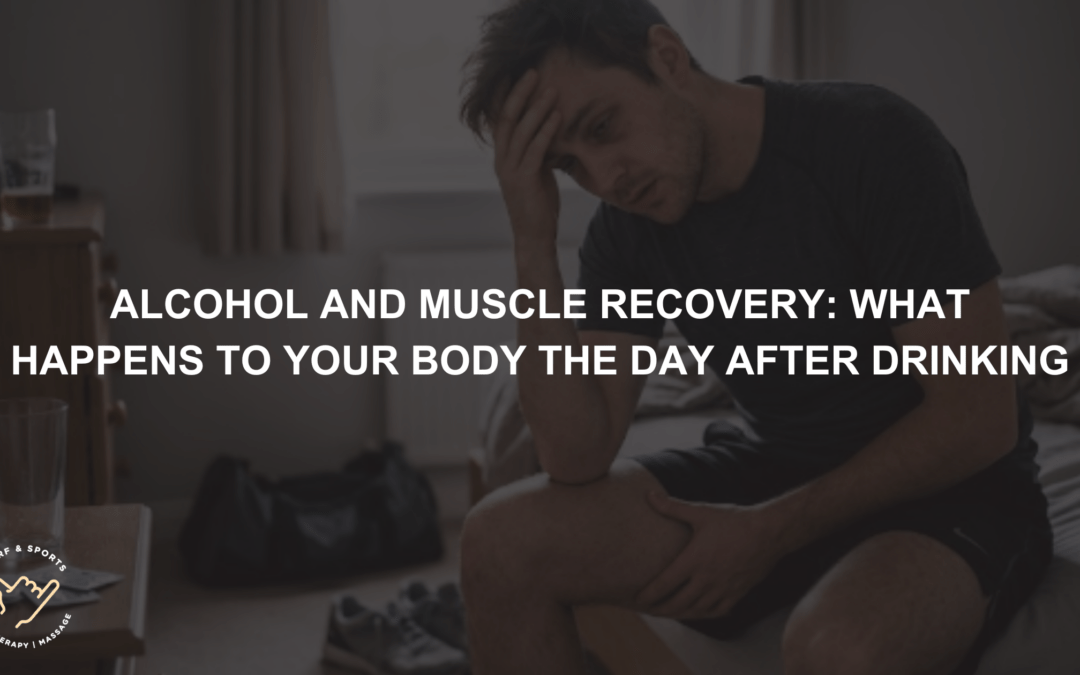
Most people are aware that drinking heavily the night before training is not ideal. What is less commonly understood is the specific physiological mechanisms involved, how long they last, and why consuming protein alongside alcohol does not fully offset the consequences.
The effects of alcohol on muscle recovery operate through four distinct pathways: suppression of muscle protein synthesis via the mTOR signalling cascade, a cortisol and testosterone shift that tips the hormonal environment catabolic, disruption to the slow-wave sleep stages where growth hormone is secreted, and a diuretic-driven fluid deficit that compounds post-exercise dehydration.
None of this is a moral argument against drinking. It is an explanation of the tradeoff so that people who train seriously can factor it into their decisions honestly.
Key Takeaways
- A peer-reviewed study published in PMC found that alcohol consumed post-exercise reduced myofibrillar protein synthesis rates by 24% when co-ingested with protein, and by 37% when co-ingested with carbohydrate, compared to protein intake alone
- The mTOR pathway, which drives the muscle-building signal generated by resistance exercise, is directly inhibited by alcohol in the post-exercise period
- Alcohol disrupts slow-wave sleep, the stage during which growth hormone is primarily secreted and overnight muscle repair occurs, meaning the consequence is still present the morning after
- Eating protein alongside alcohol does not eliminate the MPS suppression, only partially reduces it
The Post-Exercise Recovery Window
The hours following a training session are when the biological work of adaptation actually happens. Resistance exercise creates micro-damage to muscle fibres and signals the body to rebuild them stronger, a process driven by muscle protein synthesis. This anabolic state is elevated for several hours after training, making the post-exercise window a period when what goes into the body has a meaningful impact on the adaptation outcome.
It is into this window that alcohol, when consumed post-exercise, introduces its most significant effects. The timing matters because the mTOR pathway is actively signalling during this period. Alcohol does not simply reduce the benefit at the margins; it competes directly with the anabolic signaling that exercise has just generated.
Muscle Protein Synthesis: What the Research Shows
The most clinically specific research on alcohol and muscle recovery comes from a study published in PMC by Parr et al. in which physically active males completed a bout of concurrent resistance and endurance exercise, then consumed either protein alone, alcohol with protein, or alcohol with carbohydrate. Muscle biopsies taken at 2 and 8 hours post-exercise were used to measure myofibrillar protein synthesis rates directly.
The results were specific: compared to protein alone, alcohol co-ingested with protein reduced myofibrillar protein synthesis by 24%. Alcohol co-ingested with carbohydrate reduced it by 37%. Even when protein intake was adequate and the post-exercise nutritional environment was otherwise supportive, alcohol produced a significant, measurable suppression of the muscle-building response to exercise.
The mechanism is the mTOR pathway. The mammalian target of rapamycin (mTOR) is the primary intracellular signalling cascade that drives muscle protein synthesis following resistance exercise. Alcohol inhibits mTOR phosphorylation at a key regulatory site, effectively reducing the strength of the anabolic signal that exercise generated. A narrative review on alcohol, resistance exercise, and mTOR pathway signalling confirms this mechanism across both animal and human research, noting that ethanol attenuates exercise-induced increases in mTOR signalling during the post-exercise recovery period.
Practically, this means that the protein shake or post-training meal consumed alongside or after alcohol is doing less work than it would without alcohol present. The body’s capacity to use dietary protein for muscle repair is blunted while the inhibitory effect of alcohol on mTOR signalling is active.
The Hormonal Shift: Cortisol, Testosterone, and Growth Hormone
Alcohol drives a hormonal environment that works against muscle recovery through three separate channels.
Cortisol. Alcohol acutely elevates cortisol levels. Cortisol is catabolic, meaning it promotes muscle protein breakdown and suppresses anabolic signalling. Post-exercise, cortisol is already temporarily elevated as part of the normal stress response to training. Alcohol amplifies this cortisol spike and extends its duration into the recovery period, prolonging the catabolic phase that would otherwise resolve as the body transitions into tissue repair. The broader role of cortisol in physical recovery is covered in detail in the clinic’s post on stress, cortisol, and back pain, which addresses how sustained cortisol elevation affects muscle tissue beyond acute alcohol effects.
Testosterone. Alcohol acutely suppresses testosterone levels in a dose-dependent manner. Testosterone is the primary anabolic hormone supporting muscle protein synthesis and recovery. Its suppression following alcohol intake reduces the hormonal support available for the muscle rebuilding process during the recovery window.
Growth hormone. The most impactful hormonal consequence of alcohol is its effect on growth hormone secretion, which operates specifically through sleep architecture rather than directly through a blood alcohol concentration effect.
Sleep Architecture: Why the Effect Lasts Until Morning
Growth hormone in adults is secreted in pulses, with the largest pulse occurring during the first episode of slow-wave sleep (SWS), typically in the first few hours of the night. Slow-wave sleep is the deepest, most restorative stage of the sleep cycle and the stage during which the greatest tissue repair occurs.
Alcohol suppresses slow-wave sleep. Even moderate amounts produce a shift in sleep architecture: the early part of the night is characterised by lighter sleep stages, and SWS, when it does occur, is reduced in both depth and duration. The growth hormone pulse that should accompany early SWS is blunted as a result. This is why the consequences of alcohol on muscle recovery are not contained to the hours of intoxication; they extend through the night and into the following morning, affecting a person who slept for eight hours and feels rested but did not undergo the deep repair sleep that would normally constitute that rest.
The morning after a night of drinking is, from a hormonal recovery standpoint, somewhat analogous to a night of disrupted sleep, regardless of total sleep duration.
Dehydration: The Compounding Factor
Alcohol suppresses antidiuretic hormone (ADH), which normally instructs the kidneys to reabsorb water. With ADH inhibited, the kidneys excrete more fluid than is consumed, producing the diuretic effect that alcohol is well known for. In a post-exercise context, where the body is already operating with a fluid deficit from sweat loss during training, the diuretic effect of alcohol compounds the dehydration rather than contributing to rehydration.
Dehydration, as covered in the clinic’s post on hydration and muscle soreness recovery, independently worsens DOMS severity by reducing blood flow to damaged tissue and impairing the clearance of inflammatory mediators. The combination of post-exercise dehydration and alcohol-driven diuresis means that the person waking up after a post-training night of drinking is often dehydrated to a degree that independently slows recovery.
What the Dose-Effect Relationship Actually Looks Like
The research on alcohol and muscle recovery uses quantities that reflect what people actually consume socially, which makes the findings clinically applicable rather than theoretical. The Parr et al. study used 1.5 grams of alcohol per kilogram of body mass, equivalent to approximately 10 to 12 standard drinks for an average adult male.
That is a significant amount, and the severity of MPS suppression scales with dose. The research on moderate alcohol consumption and muscle recovery is less definitive: one or two standard drinks post-exercise does not carry the same evidence base for MPS suppression that heavier drinking does. What moderate drinking does still produce is some degree of sleep architecture disruption, some cortisol elevation, and the diuretic effect.
The practical takeaway is not that any alcohol undoes training. It is that the magnitude of the effect on recovery correlates with the amount consumed, the timing relative to exercise, and the frequency of the pattern. For someone training multiple times per week with specific adaptation goals, the recovery consequences of regular post-training drinking accumulate across a training block in ways that affect progress.
Frequently Asked Questions
Does eating protein with alcohol cancel out the effect on muscle recovery?
Partially, but not fully. The Parr et al. study specifically tested this scenario, finding that alcohol co-ingested with protein still reduced myofibrillar protein synthesis by 24% compared to protein alone. Eating protein post-exercise remains worthwhile, but it does not eliminate the suppressive effect of alcohol on the mTOR signalling pathway.
How long does alcohol affect muscle protein synthesis?
The MPS suppression measured in the Parr et al. study was significant at the 2 to 8 hour post-exercise timeframe, which covers the primary recovery window. Hormonal effects, including testosterone suppression and growth hormone disruption through sleep architecture, extend the consequences across the overnight period and into the following morning.
Is drinking the night before training better than drinking after?
The timing relationship is relevant. Drinking the night before training gives more time for blood alcohol concentration to clear before exercise, but the sleep architecture disruption and residual cortisol effects can still affect training quality the following day, particularly for strength and power output. The post-exercise period is the most impactful timing for MPS suppression, so drinking after training affects recovery more directly than drinking the night before a session.
Does alcohol worsen muscle soreness?
Potentially yes, through the dehydration pathway and the inflammatory amplification that cortisol elevation produces. The primary evidence base is on MPS suppression rather than on DOMS severity specifically, but the compounding effects of dehydration and cortisol on post-exercise inflammation suggest that recovery soreness is likely worsened rather than eased by post-exercise drinking.
How much alcohol is safe to drink and still train effectively?
There is no established threshold below which alcohol has zero effect on recovery physiology. What the evidence supports is that the effects are dose-dependent, and that moderate consumption produces less impact than heavy consumption. The decision involves weighing what is socially and personally appropriate against the degree to which recovery outcomes matter for the individual’s training goals. For athletes in competition preparation or targeted training blocks, minimising post-exercise alcohol is the position most consistent with optimal recovery.
Understanding the Tradeoff
The physiology of alcohol and muscle recovery does not produce a simple “never drink” conclusion. It produces a clearer picture of what happens and when, so that decisions about drinking in the context of training are made with accurate information rather than guesswork. For people who train regularly and want to understand why recovery sometimes feels harder than expected, alcohol’s effects on sleep architecture, hormonal balance, and protein synthesis are worth knowing about.
If recovery from training is a current concern, whether from soreness, slow adaptation, or residual fatigue, the team at Surf & Sports Myotherapy in Noosaville can assess the soft tissue picture and discuss the full range of recovery factors that might be contributing.
Book your appointment online or call 0423 729 694.
Opening hours: Monday–Friday 08:00–19:00 | Saturday 08:00–16:00 Location: 3/14 Thomas St, Noosaville QLD 4566

About the Author
Gary Javonena is the founder of Surf & Sports Myotherapy and holds an Advanced Diploma of Myotherapy from RMIT University.
Gary’s clinical work includes the assessment of complex musculoskeletal presentations in which referred pain, postural dysfunction, and systemic contributors intersect — including cases in which gastrointestinal function directly contributes to lumbar pain patterns. Meet the full team.
Related posts
Dehydration and Muscle Soreness: How Much Water Actually Matters for Recovery
The relationship between hydration and muscle soreness is more specific than the general advice to...

Vitamin D Deficiency and Chronic Muscle Aches – A Hidden Cause
Queensland is one of the sunniest places on Earth, and the Sunshine Coast lives up to its name —...

Magnesium Deficiency and Muscle Cramps – Are You Missing This?
Magnesium is the mineral most commonly reached for when muscle cramps are a problem — and the...