
Many people book a massage without being sure what to ask for. That can be frustrating: you walk out thinking, “That was nice,” but it wasn’t what I needed.
The truth is simple: a massage is not just a massage. There are many styles, and each is used for different goals. Some people want help with musculoskeletal pain, stiffness, or recovery after training. Others want a calmer nervous system and an hour where their body can properly switch off.
This guide explains the practical difference between remedial massage and relaxation massage, so you can choose the option that best fits your needs.
Key takeaways
- Not all massage treatments are the same. Different styles suit different goals.
- Choosing the right style can improve how satisfied you feel with your session.
- Remedial massage is commonly used for targeted musculoskeletal complaints (pain, tightness, restricted movement).
- Relaxation massage is commonly used for stress relief, comfort, and general wellbeing.
- Good clinics ask targeted questions to match you with the most suitable therapist and style.
- Some people use both at different times, depending on what their body needs.
Understanding the two main types of massage
Massage therapy is often grouped into two broad buckets for consumers: targeted therapeutic work (often called remedial) and comfort-focused relaxation work. This isn’t a strict regulatory definition, but it’s a useful way to choose what to book.
What is remedial massage (and how does it work)?
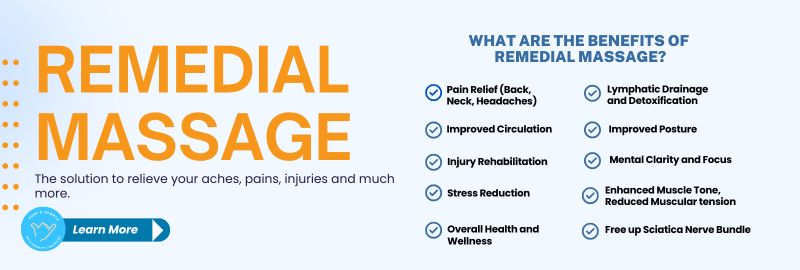
Remedial massage is a more targeted approach that focuses on musculoskeletal pain, tightness, and movement restriction. It aims to identify contributing factors and help address the areas most likely to be involved, which may help reduce pain and improve function over time.
A remedial appointment often starts with a structured assessment process. Your therapist may ask about your symptoms and history, look at posture or movement where relevant, and use hands-on assessment to guide a focused treatment plan.
Remedial massage commonly uses techniques such as deeper pressure where appropriate, trigger point work, and myofascial techniques. You might feel strong pressure in tight or sensitive areas. That can be intense, but it shouldn’t feel sharp, burning, or like nerve pain. Your feedback matters, and the therapist should adjust pressure to keep it safe and tolerable.
Many remedial therapists hold a Diploma-level qualification and maintain relevant association membership and insurance. When booking, it’s reasonable to ask what training and experience the therapist has, and what kinds of problems they commonly work with.
What is relaxation massage (and what is it for)?
Relaxation massage is designed to help you feel calm, comfortable, and safe in your body. It typically uses lighter-to-moderate pressure, rhythmic strokes, and whole-body flow.
People often choose relaxation massage for stress relief, comfort, and general wellbeing, and it may support sleep for some people. Many leave feeling less tense and more settled, though responses vary person to person.
The role of a qualified massage therapist
Choosing the right therapist is as important as choosing the right style.
- Remedial therapists assess musculoskeletal function, identify likely contributing factors, and tailor treatment within their scope. If symptoms suggest something medical, unusual, or worsening, a good therapist will recommend you see the right clinician for further assessment.
- Relaxation therapists focus on comfort, pacing, and a calm experience that helps your body unwind.
Just like different practitioners have different areas of focus, massage therapists often specialise too. Matching the style and the therapist to your goal is what makes the session feel right.
Remedial massage vs relaxation massage: the core differences
Remedial and relaxation massage differ in more than pressure. They differ in assessment, technique choice, and what the session is trying to achieve.
Comparison factor | Remedial massage | Relaxation massage |
Primary goal | Assess and help address targeted musculoskeletal complaints (pain, tightness, restricted movement) | Reduce stress, promote comfort, and support general wellbeing |
Assessment | Often includes history + relevant movement/posture checks + hands-on assessment | Usually a brief discussion of preferences and areas to avoid |
Pressure | Can be firm and specific where appropriate | Usually light to moderate and consistently comfortable |
Technique style | Focused techniques aimed at problem areas | Flowing, rhythmic strokes across the body |
Best for | Localised pain, training-related tightness, recovery support, restricted movement | Stress, feeling run-down, sleep support, general relaxation |
Session feel | Collaborative, feedback-driven | Passive relaxation encouraged |
Progress tracking | Often tracked with symptom change and functional goals (where relevant) | Usually tracked by how you feel: calm, sleep, tension, mood |
Treatment goals: therapeutic focus vs stress relief
Remedial massage is typically chosen when you have a specific complaint you want to address, such as a sore shoulder, tight hips, or a back that feels “locked up.” The session is usually more focused on particular areas.
Relaxation massage is typically chosen when the main goal is to feel calmer and more comfortable overall. It’s less about problem-solving and more about helping your body settle.
Pressure: why harder isn’t always better
Firmer pressure isn’t automatically better. If your nervous system is already stressed, very firm work can feel like more stress rather than relief.
A good rule: choose the pressure that matches your goal. If you want targeted work on a stubborn area, remedial may include firmer techniques. If you want to unwind, a lighter-to-moderate relaxation session often works better.
Remedial massage therapy: common techniques and realistic benefits
Remedial massage may use a mix of techniques depending on the therapist and your needs.
Deep tissue work and trigger point techniques
Deeper work can be used to address tight or sensitive areas. Trigger point techniques may be used when a therapist identifies a local spot that seems to spread discomfort or limit movement.
The goal isn’t to “push through pain.” It’s to apply the right amount of pressure to create change without flaring symptoms.
Myofascial techniques for tissue mobility
Myofascial techniques aim to improve how tissues glide and move. Some people find this helps them feel less restricted and more comfortable in movement.
Sports injuries, training load, and chronic musculoskeletal tension
People often book remedial massage to support recovery from training, manage recurring tightness, or stay comfortable while building strength.
If you have a diagnosed injury, severe symptoms, or symptoms that are worsening, it’s worth checking in with an appropriate clinician. Massage can be part of a broader plan, but it’s rarely the whole plan.
Mobility and circulation (keep the claims honest)
Remedial massage may increase local circulation and help some people feel looser and recover more comfortably. It’s commonly used alongside sensible load management, strength work, and recovery habits.
Relaxation massage: techniques and what people usually notice
Relaxation massage focuses on creating a steady, soothing session.
Flowing strokes and gentle techniques
Relaxation sessions often use long strokes and consistent pacing. The aim is to help your body unwind. People often notice slower breathing, less mental chatter, and a general sense of ease during and after the massage.
Full-body approach for comfort and wellbeing
Relaxation massage usually covers the full body in a predictable, even way. Many people like this because it feels complete and calming.
Regular sessions and wellbeing maintenance
Some people schedule regular relaxation sessions as part of their wellbeing routine. If you’re under high stress or sleeping poorly, consistency often matters more than intensity.
A note on “fluid retention” claims
Some people report feeling “less puffy” temporarily after massage. Persistent swelling, unexplained swelling, or swelling that’s getting worse should be assessed by a clinician.
Thai massage and other gentle styles
Thai massage can be deeply relaxing, and it can range from gentle to strong depending on the style and practitioner. Swedish massage, hot stone massage, and aromatherapy massage are other common options that many people find calming.
How to choose the right massage in Noosa
Start with your goal.
Choose remedial massage if you:
- have a specific sore or tight area you want targeted
- feel restricted in movement
- want a more focused, feedback-driven session
Choose relaxation massage if you:
- feel stressed, tense, or mentally overloaded
- want a consistently comfortable, full-body session
- want to unwind and sleep better
When you book, tell the clinic:
- what you want help with
- where you feel it
- what makes it better or worse
- whether you prefer light, medium, or firm pressure
And remember: harder isn’t always better. The best massage is the one that matches what your body needs right now.
FAQ
What’s the main difference between remedial massage and relaxation massage?
Remedial massage is typically more targeted and used for musculoskeletal complaints like pain, tightness, or restricted movement. Relaxation massage is typically used for stress relief, comfort, and general wellbeing.
How do I know which one I need?
If you have a specific complaint you want addressed, start with remedial. If your main goal is to unwind and feel calmer overall, start with relaxation. If you’re unsure, tell the clinic what you’re feeling and what outcome you want.
Does remedial massage have to be painful to work?
No. You might feel strong pressure in certain areas, but it shouldn’t feel sharp, burning, or like nerve pain. You should be able to breathe normally and give feedback.
Can I do both as part of a routine?
Yes. Many people use remedial massage when something feels off, and relaxation massage when stress is high or they want general maintenance.