

Arthritis pain isn’t just “the joint.” For many people with arthritis, the bigger day-to-day problem is what happens around the joint: muscle tension, protective guarding, stiffness, and the way your body starts moving differently to avoid pain.
So, can remedial massage help with arthritis pain? For some people, yes, as part of a broader pain management plan. It won’t “treat arthritis” or reverse joint changes, but massage therapy may help reduce pain, ease stiffness, and support range of motion by working with soft tissue, fascia, and stress-related tension.
Arthritis: the joint problem that becomes a whole-body problem
“Arthritis” is an umbrella term for many health conditions affecting joints and surrounding tissues. Two common forms of arthritis are:
- Osteoarthritis (often described as wear-and-tear changes)
- Rheumatoid arthritis (an inflammatory, immune-mediated type of arthritis)
Both can lead to chronic pain, reduced joint mobility, and a cycle where pain leads to less movement, which leads to more stiffness.
What the evidence says about massage for arthritis
Research on massage for arthritis is mixed, but there is evidence that massage can be beneficial for pain and function in some groups, particularly those with osteoarthritis.
One often-cited trial looked at Swedish massage for knee osteoarthritis and found improvements in pain and function measures after a course of regular massage. That doesn’t mean Swedish massage is the only answer, or that results are guaranteed, but it supports the idea that regular massage therapy sessions can help some people with arthritis pain.
If you’re writing for a clinic, the safest claim is
- Massage may help with arthritis-related discomfort, stiffness, and overall well-being for some people.
Why remedial massage therapy is different from “just relaxation.”
A relaxation massage can feel wonderful, and promoting relaxation matters for pain. Remedial massage therapy tends to be more assessment-driven and goal-based.
A remedial massage therapist may:
- Focus on specific musculoskeletal patterns linked to your arthritis pain
- Use targeted massage techniques rather than a full-body routine
- Adjust pressure and approach based on irritability (especially during flares)
- Build a treatment plan that fits your symptoms, tolerance, and budget
How massage may help (without overpromising)
Massage involves mechanical pressure and nervous system effects. In arthritis care, the most defensible benefits are usually about soft tissue.
Massage therapy may:
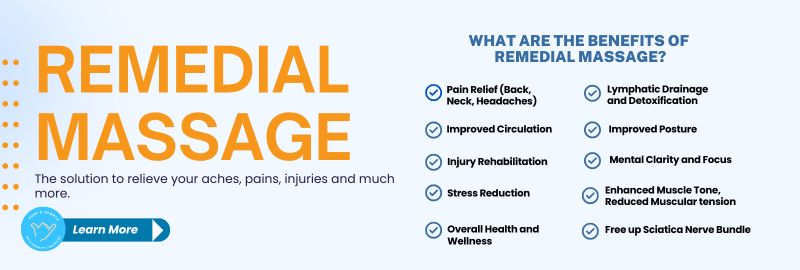
- Help release muscle tension around painful joints
- Reduce stress and support overall well-being
- Improve circulation and blood flow locally for a short period
- Help you move more comfortably, supporting the range of movement and joint mobility
Some people describe this as pain relief; others notice it as “I can move more easily” or “I’m less guarded.”
Techniques a therapist may use for arthritis-related pain
A qualified massage therapist will adapt the type of massage to the type of arthritis, the joint involved, and how sensitive things are that day.
Common options include:
- Swedish massage (often used for relaxation, comfort, and gentle tissue work)
- Deep tissue massage (used selectively; deep tissue massage may help release chronic muscle tension, but it’s not always appropriate)
- Trigger point therapy (for muscle knots that cause pain and contribute to back or neck pain patterns).
- Myofascial techniques refer to methods of releasing fascia and connective tissues.
A good rule: if pressure makes you brace or flare for days, it’s too much.
Osteoarthritis vs rheumatoid arthritis: what changes
Massage therapy may look different depending on the type of arthritis.
- Osteoarthritis: massage focuses on the surrounding soft tissue, stiffness, and movement confidence.
- Rheumatoid arthritis: during flares, treatment is usually gentler and more conservative. The therapist may avoid aggressive work around hot, swollen joints.
If you’re unsure, ask your therapist how they modify treatment for inflammatory conditions.
What to expect in your first session
A first appointment usually includes:
- A brief history of arthritis pain, including where it occurs, what aggravates it, and what helps.
- A simple movement check to see what’s limited
- A plan for the session (what areas to work on, what to avoid)
If you have severe arthritis, your therapist may start lighter and build up over time.
How often should you go?
There’s no perfect schedule. Many people do best with regular massage early on, then space it out.
A practical approach to pain management:
- Start with weekly or fortnightly sessions for a short block
- Reassess function and pain
- Move to maintenance (every 3 to 6 weeks) if you’re stable
If cost is a factor, shorter sessions that target priority areas can still be useful.
Self-massage between sessions
Self-massage can help you manage day-to-day stiffness, especially in your hands, forearms, thighs, and calves.
Keep it gentle:
- 5 to 10 minutes
- Light pressure
- Stop if pain spikes
Your therapist may show you simple self-massage options that are specifically for arthritis.
When to pause and get medical advice
Massage may help, but it’s not the right next step for every symptom.
Get medical advice if you have:
- A hot, very swollen joint with fever or feeling unwell
- Sudden severe pain after a fall or injury
- New numbness, weakness, or significant nerve symptoms