
Surfing in Noosa looks effortless right up until your shoulders feel cooked, your neck pain creeps in, or your lower back starts complaining after a long paddle. Surfing is a full-body sport with a few repeat offenders: paddling volume, extended spine positions, and the stop-start intensity of pop-ups and turns.
This guide breaks down how remedial massage therapy and sports massage in Noosa can support recovery, manage pain and discomfort, and help prepare the body for consistent time in the water. It’s general education, not a diagnosis.
Surf fitness isn’t gym fitness
A surf session is a mix of endurance (paddling), short bursts (pop-up), and constant micro-adjustments (balance and turning). Over time, that combination can load soft tissue and connective tissue in very specific ways.
Common patterns surfers report:
- Shoulder tightness and fatigue after paddling
- Neck pain from sustained head-up paddling posture
- Lower back pain from repeated extension and rotation
Hip and lower-body stiffness that affects pop-up speed and control
Why a relaxation massage often misses the point
Relaxation and stress relief have their place. But relaxation massage usually isn’t built around surf mechanics.
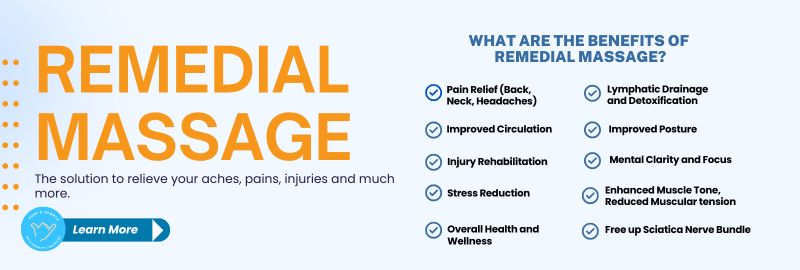
Remedial massage focuses on:
- Specific areas of the body that are overloaded
- Trigger points and trigger point therapy are relevant when pain is referred or movement is limited.
- Myofascial release targets broader restrictions in the thoracic spine, hips, and shoulder girdle.
- Mobilisation and assisted movement to restore usable range
That’s the difference between a type of massage that feels relaxing and a treatment plan that supports an active lifestyle.
The three surf loads that beat people up
1. Paddle volume (shoulders, upper back, neck)
Paddling is repetitive and often asymmetrical. It can irritate the shoulder complex, load the upper traps, and create trigger points that feel like an ache down the arm or into the neck.
2. Pop-ups and compression (hips, quads, calves)
Short, explosive effort plus repeated crouching can leave hips and lower limbs feeling tight, which can change how you move on the board.
3. Extension and rotation (lower back)
Extended paddling posture plus rotational turns can contribute to lower back pain, especially when recovery is poor or you’re surfing more days than you’re not.
What a remedial massage session for surfers can include
A good remedial massage session isn’t a generic routine. A qualified remedial massage therapist will usually:
- Ask about surf frequency, recent flare-ups, and where pain relief matters most
- Check movement and load tolerance (simple screening, not medical diagnosis)
- Work through the key tissues that drive symptoms.
Massage techniques commonly used for surfers:
- Deep tissue massage for chronic tightness in shoulders, lats, pecs, hips, and lower back
- Trigger point therapy to calm trigger points and reduce referred pain patterns
- Myofascial release to improve tissue glide through soft tissue and connective tissue chains
- Mobilisation and assisted stretching to restore practical range for paddling and pop-ups
Sports massage helps most when it’s timed well: lighter work pre-surf to prepare the body, and more recovery-focused work after heavy sessions.
Surf problems that often respond well to bodywork
Massage helps when the driver is muscular or myofascial.
Common surf-related complaints:
- Shoulder tightness and rotator cuff overload patterns
- Neck pain and upper trapezius tension
- Lower back pain linked to extension fatigue
- General stiffness that reduces speed, control, and confidence
See a healthcare professional if you experience pins and needles, weakness, severe swelling, fever, or pain following a significant impact.
Injury prevention: what changes when you’re consistent
Injury prevention isn’t one magic session. It’s reducing the background load that builds up across a season.
Regular remedial massage therapy can support:
- Better recovery between surf days (less lingering tightness)
- Improved circulation and blood flow to fatigued tissues
- Fewer flare-ups of chronic pain patterns
- More usable mobility for paddling and pop-ups
Noosa specifics: where this fits with myotherapy and physiotherapy
In Noosaville and Noosa Heads, you’ll often see remedial massage services offered alongside myotherapy and physiotherapy in a wellness clinic.
Depending on the issue, a combined approach may include:
- Remedial massage therapy for soft tissue and recovery
- Physiotherapy for strength, rehab, and return-to-sport planning
- Dry needling for stubborn trigger points (where appropriate)
- Cupping as an adjunct for tissue release (where appropriate)
If you’re using private health, ask whether your therapist is eligible for rebates and whether you can book online.
Opening hours: Monday–Friday 08:00–19:00 | Saturday 08:00–16:00 Location: 3/14 Thomas St, Noosaville QLD 4566

About the Author
Gary Javonena is the founder of Surf & Sports Myotherapy and holds an Advanced Diploma of Myotherapy from RMIT University.
Gary’s clinical work includes the assessment of complex musculoskeletal presentations in which referred pain, postural dysfunction, and systemic contributors intersect — including cases in which gastrointestinal function directly contributes to lumbar pain patterns. Meet the full team.
Related posts

Is Remedial Massage Safe During Pregnancy? Trimester-by-Trimester Guide
Executive Summary: Remedial massage is generally considered safe during pregnancy, but what's...
Remedial Massage for Seniors: Benefits for Mobility and Pain Relief
Executive Summary: Remedial massage can be genuinely useful for older adults, but only when it's...
The Science Behind Remedial Massage: Evidence-Based Benefits
Executive Summary: Remedial massage works by physically changing the state of your soft tissues...