
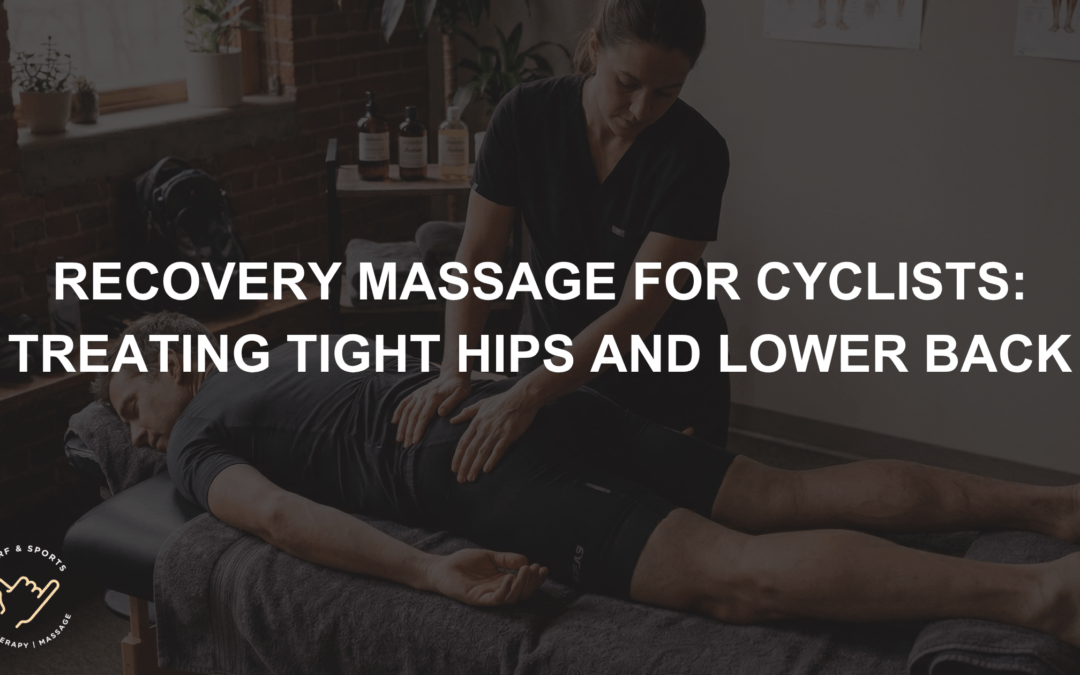
Remedial massage for cyclists is a targeted approach to managing the hip flexor tightness, lower back pain, and soft tissue tension that develop through long hours on the bike. Cycling is a repetitive, fixed-position sport—and that combination creates predictable musculoskeletal consequences that accumulate quietly across a training regimen until they affect performance or become painful. At Surf & Sports Myotherapy in Noosaville, the team works with riders across the Sunshine Coast to address the specific muscle tension patterns, myofascial restrictions, and joint mobility limitations that make cycling-related injuries so common—and so preventable.
Key Takeaways
- The fixed position of cycling progressively shortens the hip flexors, loads the lower back, and creates muscle imbalances that affect both comfort and biomechanics on the bike.
- Remedial massage targets the hip flexors, glutes, hamstrings, and thoracic spine—the muscle groups most affected by long hours in the saddle.
- Bike fit influences how soft tissue loads are distributed across the body; massage addresses the consequences of that load, but a biomechanical assessment may be needed for persistent issues.
- Regular remedial massage as part of a structured training program reduces the risk of injury and supports more consistent time on the bike

Why Cyclists Develop Tight Hips and Lower Back Pain
The cycling position places the body in sustained hip flexion for the duration of every ride. The hip flexors—primarily the iliopsoas and rectus femoris—remain in a shortened position throughout, and over time this postural demand produces chronic tightness that persists well beyond the ride itself.
The lower back tells a related story. A forward-flexed cycling position loads the lumbar spine with muscular fatigue, especially during long rides or when the saddle height and handlebar position do not match the rider’s anatomy well. The gluteus medius, piriformis, and thoracolumbar fascia all contribute to spinal stability on the bike—and when these structures become tight or develop myofascial trigger points, lower back pain and referred discomfort into the hip and leg follow.
For weekend warriors and competitive riders alike, these patterns build gradually. A single long ride rarely causes an acute problem. It is the accumulation—ride after ride, week after week—that eventually produces the aches and pains that limit performance and, if left unmanaged, lead to more significant soft tissue strain.
How Remedial Massage Addresses Cyclist-Specific Soft Tissue Patterns
Remedial massage is a form of manual therapy designed to assess and treat specific musculoskeletal dysfunction rather than provide general relaxation. For cyclists, this means the massage therapist tailors the session to the individual rider’s presentation—taking into account their training volume, the type of cycling they do, and the specific areas where tightness or pain is limiting their performance or comfort.
Releasing Hip Flexor and Quadriceps Tension
The hip flexors are the most consistently overloaded muscle group in cyclists. Sustained hip flexion across a long ride shortens the iliopsoas and rectus femoris progressively, producing a tightness that restricts hip extension during both cycling and everyday movement. Over time, this restriction alters pelvic position and contributes directly to lower back pain by increasing lumbar load.
Remedial massage uses deep tissue work and sustained myofascial release through the anterior hip and quadriceps to restore normal tissue extensibility. When tight muscles in this region are effectively treated, the pelvis returns to a more neutral position—reducing the lumbar strain that accumulates through heavy training on the bike.
Treating Glute and Piriformis Tension
The glutes are significant power generators in cycling, but they are also highly susceptible to trigger point development — particularly in riders who spend long hours in the saddle. Active myofascial trigger points in the gluteus medius and piriformis produce referred pain that can travel down the leg in a pattern that mimics sciatica, creating confusion about the actual source of the problem.
Trigger point therapy applied to the glute and piriformis region deactivates these trigger points, reducing referred pain and restoring normal muscle tone. This is one of the more clinically meaningful interventions available for cyclists presenting with hip and posterior leg pain that has not responded to stretching alone. For cyclists also dealing with hip flexor-specific soreness, the team’s post on remedial massage for hip flexor pain and tightness covers that presentation in more depth.
Addressing the Hamstring and Calf
Hamstring tightness is a near-universal finding in cyclists. The hamstring functions both as a knee flexor and a hip extensor during the pedal stroke, and the sustained seated position keeps these muscles in a shortened state for the duration of every ride. Restricted hamstring flexibility affects knee biomechanics and contributes to both knee pain and altered lumbar loading.
The calf—particularly the gastrocnemius and soleus—absorbs significant load through the ankle during each pedal stroke. In cyclists with tight calves, Achilles tendinitis and ankle stiffness are common downstream consequences. Remedial massage works through these muscle groups with deep tissue technique and targeted myofascial release, restoring the mobility that repetitive pedaling progressively reduces.
Mobilising the Thoracic Spine
The thoracic spine is frequently overlooked in cycling recovery, yet thoracic stiffness is one of the primary contributors to neck pain, shoulder tension, and the compensatory lumbar overload that produces lower back problems in riders. A cyclist who cannot move freely through the mid-back places greater demand on the lumbar spine to accommodate the forward-flexed riding position.
Joint mobilisation of the thoracic spine, combined with soft tissue work through the rhomboids and upper trapezius, restores the mobility that underpins a more comfortable and biomechanically efficient position on the bike.
The Role of Bike Fit in Cyclist Soft Tissue Health
Remedial massage is highly effective at managing the soft tissue consequences of cycling—but it works best alongside a properly fitted bike. Saddle height, cleat position, and handlebar reach all determine how load is distributed across the hip flexors, lower back, knee, and ankle during every pedal stroke.
As Better Health Channel’s cycling injury prevention guide notes, incorrect saddle height and poor riding posture are among the most common contributors to lower back and knee pain in cyclists — factors that no amount of massage alone can fully correct.
A saddle that sits too low, for example, increases knee flexion angle and anterior knee pain. A reach that is too long creates chronic thoracic flexion and neck strain. When these biomechanical contributors remain unaddressed, massage provides relief, but the same patterns keep coming back.
From the Clinic “Cyclists often present with the same tight spots session after session — and the soft tissue work holds for a week or two before the tension comes back. When that happens, the bike fit is almost always part of the conversation. Massage addresses what the body is carrying; a proper bike assessment addresses why the body keeps carrying it.”
For cyclists dealing with persistent lower back pain that is not fully resolving with soft tissue treatment alone, a biomechanical assessment is a worthwhile next step. The team’s article on lower back pain in cyclists—causes and solutions covers the mechanical contributors to this presentation in more detail.
Cupping as a Complementary Technique for Cyclists
Alongside deep tissue massage and myofascial release, cupping is a technique the team uses for cyclists with significant fascial restriction and chronic muscle tension—particularly through the lower back, glutes, and posterior thigh.
Where deep tissue massage applies compressive pressure downward through the tissue, cupping lifts the fascia and superficial muscle layers by creating negative pressure. This lifting action helps improve blood flow, lessens tight spots in the muscles, and is particularly helpful in sensitive areas where pressing down might hurt. Cupping is not a standalone treatment — it is one tool within a broader remedial massage session, applied where the therapist determines it is the most effective approach for the cyclist’s specific presentation.
Pre-Race and Post-Race Massage for Cyclists
Pre-Race Massage | Post-Race Massage | |
Primary goal | Prepare the body for effort; activate circulation and reduce residual stiffness | Accelerate recovery, reduce delayed onset muscle soreness and clear metabolic by-products |
Technique | Brisk, lighter strokes; activation-focused | Slower, deeper; targeted to fatigued and tight muscle groups |
Pressure | Light to moderate | Moderate to deep depending on tolerance and timing |
Best timing | 12–24 hours before a big event | 24–48 hours after a race or hard training session |
Focus areas | Hip flexors, quads, glutes—key power and stability muscle groups | Full lower body coverage: lower back, glutes, hamstrings, calves |
A post-race massage in the immediate aftermath of a big event should be lighter than many cyclists expect. The inflammatory response in the hours following intense exercise is part of the recovery process — aggressive deep tissue work in this window can increase soreness rather than reduce it. Waiting 24 to 48 hours before a deeper session allows the acute response to settle and the tissue to accept more targeted work effectively.
Other Cycling Injuries Remedial Massage Can Help Address
Beyond hip and lower back issues, regular remedial massage supports the management of several other common cycling-related conditions:
- Knee pain—often driven by iliotibial band syndrome, patellofemoral pain syndrome, or hamstring and calf tension altering knee tracking mechanics
- Iliotibial band syndrome—a common overuse injury in cyclists, linked to hip abductor weakness and lateral quad tightness
- Achilles tendinitis—associated with calf overload and reduced ankle range of motion through the pedal stroke
- Chronic lower back pain—addressed through a combination of lumbar soft tissue work, glute release, and thoracic mobilisation; for a deeper look, see the team’s post on remedial massage for chronic lower back pain
- Neck and shoulder tension—a consequence of sustained thoracic flexion and the forward head position maintained during long rides
For an evidence-based overview of how hip pathomechanics, bike positioning, and myofascial trigger points interact in cyclists, this peer-reviewed clinical commentary on bike fit and hip pain in cyclists from PMC provides a solid reference on the anatomy and treatment rationale behind this work.
Frequently Asked Questions
How often should cyclists get a remedial massage?
For cyclists training regularly, a fortnightly to monthly schedule provides a good maintenance baseline. During heavy training blocks or in the lead-up to a significant event, more frequent sessions — every one to two weeks — allow the therapist to manage accumulated tension before it limits performance or leads to injury. Your therapist can help determine the right frequency based on your training load and how your body is responding.
Is lower back pain from cycling something a massage therapist can treat?
Remedial massage can help with lower back pain from cycling by relaxing tight muscles in the hips and glutes, treating specific painful spots, and improving movement in the upper back. Where lower back pain has a structural component or is not responding to soft tissue treatment, a physiotherapy assessment can help clarify the full picture. For a combined approach, the team at Surf & Sports Myo can coordinate both.
Will massage improve my performance on the bike?
Improved tissue flexibility, better joint mobility, and reduced muscle tension all contribute to more efficient pedalling biomechanics. Cyclists who incorporate regular massage into their training regimen typically report less fatigue through long rides, reduced post-ride soreness, and better range of motion — all of which support improved performance and training consistency over time.
What is the difference between remedial massage and sports massage for cyclists?
Sports massage is primarily performance-focused—used to prepare for or recover from specific training sessions or events. Remedial massage involves a clinical assessment of the cyclist’s physical condition and addresses the specific dysfunction driving their symptoms. Remedial massage provides a more targeted, condition-specific treatment for riders dealing with chronic hip flexor tightness or recurring lower back pain.
Can cyclists benefit from massage even without a specific injury?
Absolutely. Every cyclist who trains regularly accumulates soft tissue tension that benefits from regular, effective treatment — whether or not a specific injury is present. Proactive massage allows the therapist to identify and address developing problem areas before they produce symptoms, keeping the rider on the bike and training consistently rather than managing recurring aches and pains.
Ride More, Recover Better
Hip tightness and lower back pain are not inevitable consequences of cycling—they are manageable with the right soft tissue care, applied consistently. Remedial massage gives cyclists a practical and effective tool for addressing the physical demands of the sport before those demands become injuries.
If you are a cyclist on the Sunshine Coast dealing with tight hips, persistent lower back pain, or recurring muscle soreness that is affecting your training or enjoyment on the bike, the team at Surf & Sports Myotherapy in Noosaville is here to help.
Book your appointment online or call 0423 729 694.
Opening hours: Monday–Friday 08:00–19:00 | Saturday 08:00–16:00 Location: 3/14 Thomas St, Noosaville QLD 4566